







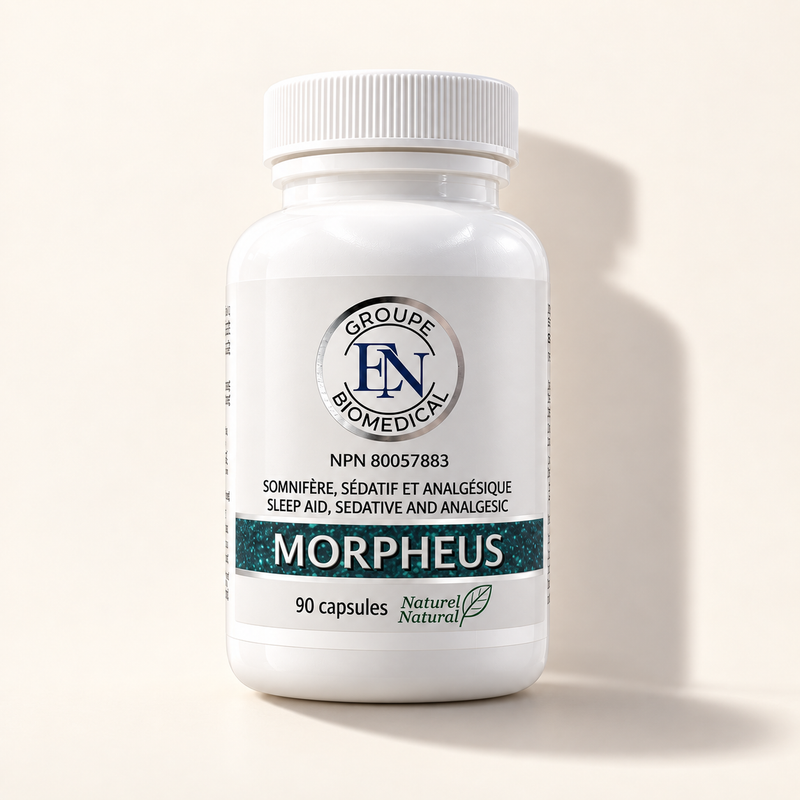
MORPHEUS

Sleep aid, sedative and analgesic

Format
Price range: $48.00 to $260.00
$48.00
Buy Now
SLEEP AND REST
NPN
80057883
Active ingredient per capsule
California Poppy — Eschscholzia californica — 470 mg
100% Natural
Made in Canada
100% Natural
Made in Canada
MORPHEUS

Sleep aid, sedative and analgesic

$48.00
Buy Now

WHEN THE DAY GIVES WAY

The Art of Rest

There is a particular pleasure in an evening that asks nothing more of us. Yet even as the surroundings grow quiet, the day can linger in our thoughts. Rest does not always arrive with nightfall.

MORPHEUS finds its botanical expression in California poppy— Eschscholzia californica —traditionally used in Herbal Medicine to help ease restlessness and nervousness, and to aid sleep during periods of mental stress.

It is this passage from a busy mind to the possibility of rest that gives MORPHEUS its purpose. An invitation to make room for repose, and to give the night the consideration we so readily give the day.


BENEFITS


SLEEP

support

Helps promote restful sleep

CALM & RELAXATION

support

Helps relieve restlessness/
and nervousness

PAIN

relief

Helps alleviate pain

DOSAGE


2 to 4

CAPSULES

Quantity

1 to 2

x

DAILY

Frequency

THE STORY BEHIND THE NAME

Where Dreams Take Shape

In Greco-Roman mythology, Morpheus was the divine shaper of dreams. The son of Sleep, he moved silently through the night, giving form to the visions that unfold within the sleeping mind.

His name derives from the ancient Greek morphē, meaning “form” or “shape” — a reflection of his extraordinary ability to bring dreams to life.

MORPHEUS draws its name from this ancient mythology, evoking the delicate passage between wakefulness and sleep, where the day's thoughts gradually surrender to the world of dreams.

THE ESSENCE WITHIN

The Quiet Within the Bloom

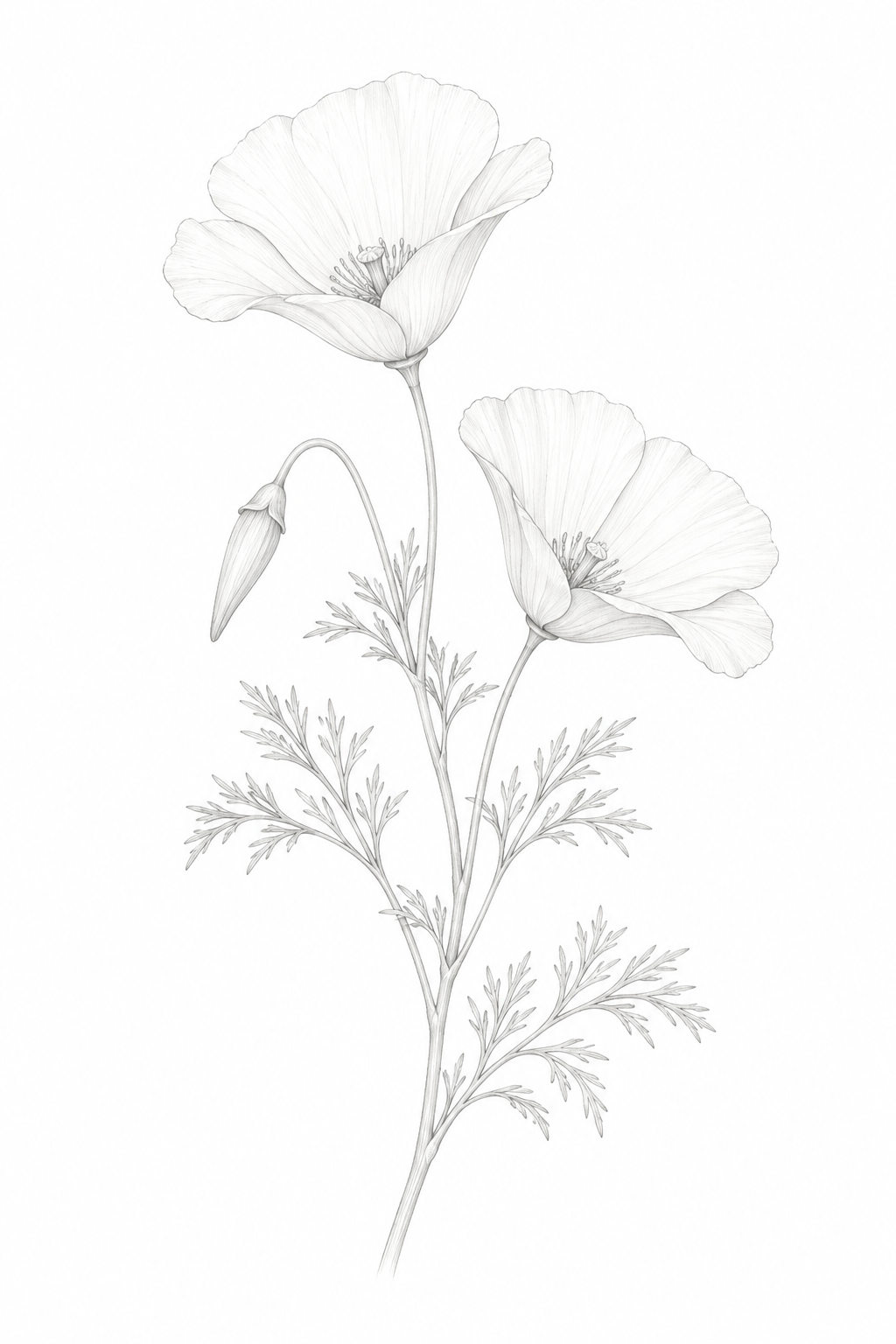
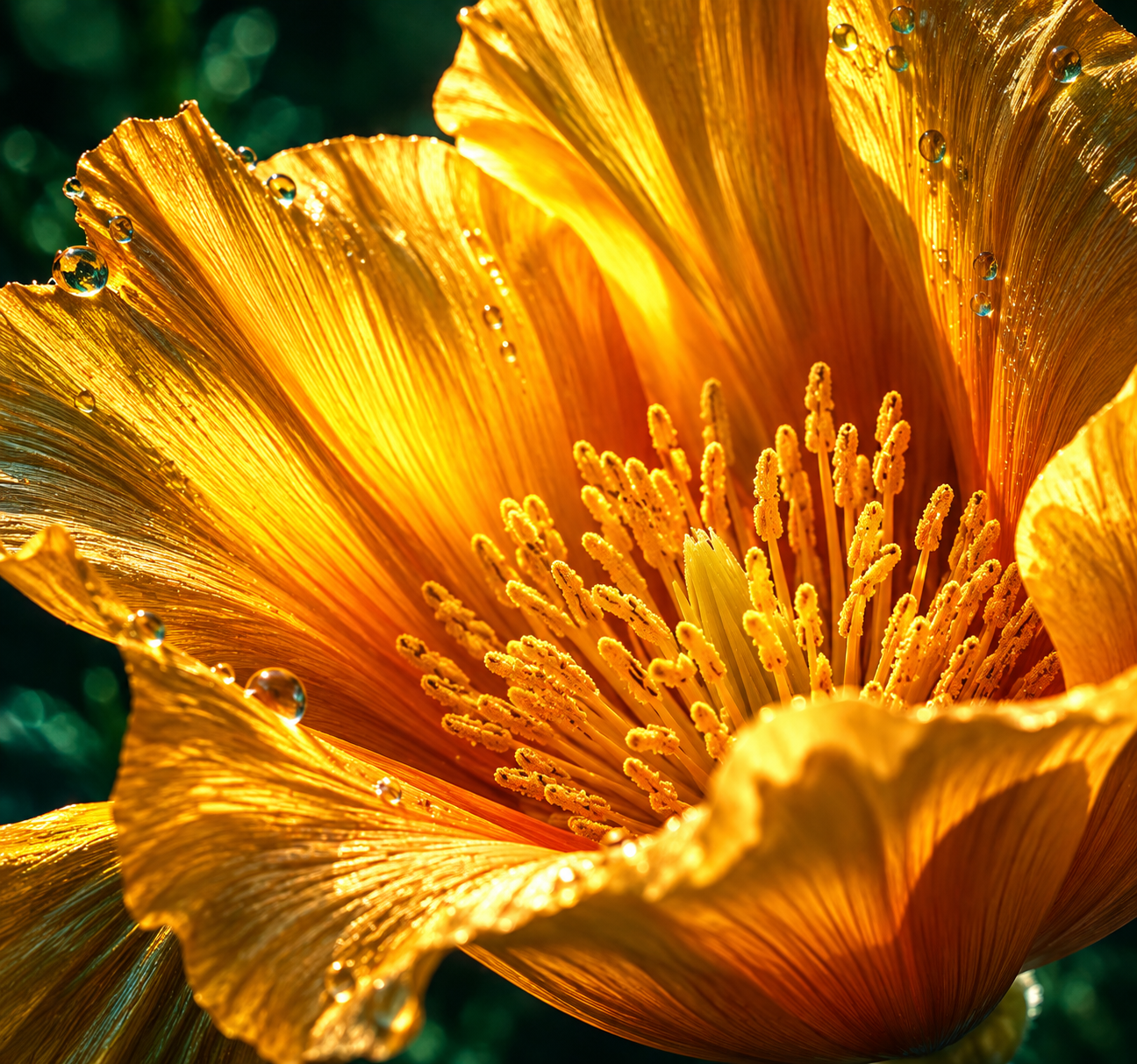
Beneath the golden petals of the California poppy, Eschscholzia californica, lies a distinctive botanical chemistry. Native to western North America, this delicate flower is recognized for its luminous blossoms and finely divided, blue-green foliage.

Yet beyond its appearance lies a complex composition that has attracted scientific interest for its relationship with the nervous system.

A GLIMPSE INTO HISTORY

Long before the California poppy entered European botanical literature, it held a place in the traditions of Indigenous communities along the Pacific coast.

Among the Ohlone people, historical accounts describe a particularly delicate custom: placing California poppy blossoms beneath the beds of restless children to encourage relaxation. In 1816, naturalist Adelbert von Chamisso encountered the flower near present-day San Francisco. He later named it Eschscholzia californica in honour of his fellow naturalist Johann Friedrich Eschscholtz.

From the golden hillsides of California to the pages of botanical history, the flower's association with rest has endured alongside a growing scientific interest in its natural properties.

BEYOND THE EXTRACT

From Botany to Physiology

Sleep is far more than the absence of wakefulness. It is a carefully orchestrated biological process, governed by the interaction of neural pathways that regulate alertness, relaxation, and the transition into rest.

When a capsule dissolves, its botanical constituents are released into the digestive system, where certain compounds may be absorbed and metabolized.

MORPHEUS

BY E.N. BIOMEDICAL

A botanical legacy, elevated through precision. Nature at the source. Science in every detail.

Nature, Understood in Depth botanical background

Nature,

Understood in Depth

E.N. NATURAL PRODUCTS

E.N. & You

Our way of thanking you for choosing E.N. Biomedical.

Earn points

Receive 10 welcome points when you join, then earn 1 point for every $1 spent on products. Your points accumulate with each purchase, bringing you closer to your next reward.

Choose your reward

• 100 points — $5 off your next purchase.

• 400 points — A complimentary product of your choice, valued at up to $75, added to your next paid order.

Enjoy a little saving along the way, or keep collecting points for a complimentary addition to your routine.

A few details

Points are calculated on the amount paid for products after discounts, excluding taxes and shipping. When you redeem a reward, the corresponding points are deducted from your balance.

Complimentary products are subject to availability and must accompany a paid order. Shipping charges, where applicable, remain payable.

All amounts are in Canadian dollars.

FULL PRODUCT DETAILS

MORPHEUS

MEDICINAL INGREDIENT

Active ingredient per capsule

NON-MEDICINAL INGREDIENTS

Hypromellose, magnesium stearate

RECOMMENDED USE

Traditionally used in Herbal Medicine as a hepatoprotectant/liver protectant and to help support liver function.
Used in Herbal Medicine to help relieve digestive disturbances, including dyspepsia (indigestion).

WHEN TO CONSIDER

When falling asleep becomes difficult, nights are interrupted by frequent awakenings, or a restless mind makes it challenging to unwind. Particularly relevant during periods of heightened nervous tension, when restoring a sense of calm, easing occasional physical tension, and enjoying more restful sleep become priorities.

DOSAGE

Adults: 1 capsule, 1–3 times daily, use for at least 3 weeks to see beneficial effects.

CAUTIONS & WARNINGS

Consult a health care practitioner if symptoms persist or worsen.
Consult a health care practitioner prior to use if you are pregnant.

KNOWN ADVERSE REACTIONS

Stop use if hypersensitivity or allergy occurs.

THE ESSENCE WITHIN

The Quiet Within the Bloom

Beneath the golden petals of the California poppy, Eschscholzia californica, lies a distinctive botanical chemistry.

Native to western North America, this delicate flower is recognized for its luminous blossoms and finely divided, blue-green foliage. Yet beyond its appearance lies a complex composition that has attracted scientific interest for its relationship with the nervous system.

Understanding California poppy begins with its naturally occurring alkaloids — a diverse family of nitrogen-containing plant compounds. Among them are protopine, allocryptopine, californidine, and reticuline, each belonging to a broader group known as benzylisoquinoline alkaloids.

These compounds are not chemically identical. Protopine and allocryptopine belong to one structural class, while californidine is classified among the pavine alkaloids. Their different molecular arrangements contribute to the plant's chemical diversity, offering researchers several distinct constituents to investigate rather than a single isolated active ingredient.

This diversity also extends throughout the plant itself. The flowering aerial parts and roots contain different concentrations and combinations of alkaloids. The aerial parts are particularly associated with pavine and certain aporphine alkaloids, while the roots contain greater proportions of other compounds. The part of the plant selected for a preparation therefore matters when examining its botanical composition.

Of particular scientific interest is the relationship between certain California poppy alkaloids and GABA, or gamma-aminobutyric acid — one of the principal inhibitory neurotransmitters in the human nervous system.

GABA helps regulate communication between nerve cells by reducing certain forms of neuronal activity. This inhibitory signalling contributes to the balance between excitation and relaxation within the brain, making it an important area of research in the physiology of sleep and nervous-system activity.

Laboratory studies have examined how individual California poppy alkaloids interact with GABA-A receptors. Among them, a compound known as (S)-reticuline has demonstrated an ability to modulate certain receptor subtypes under experimental conditions. These findings offer a possible explanation for some of the plant's traditionally associated calming properties, although they do not establish that the complete botanical preparation produces the same effects in humans.

California poppy's relationship with rest is also reflected in herbal medicine. Its flowering aerial parts have traditionally been used to help relieve restlessness and nervousness, and as a sleep aid during periods of mental stress. These uses are recognized within traditional herbal medicine, even as clinical research continues to investigate the underlying mechanisms and effectiveness of different preparations.

The distinction between botanical composition and preparation is important. The concentration of individual alkaloids can vary according to the plant material, growing conditions, harvesting, and processing methods. Two preparations derived from the same species may therefore possess different chemical profiles.

At the heart of MORPHEUS is 470 mg of Eschscholzia californica per capsule. This identifies the quantity of its botanical ingredient, rather than the concentration of any one alkaloid. Understanding that distinction is essential when considering the relationship between a plant's natural chemistry and the scientific evidence surrounding it.

MORPHEUS carries forward the botanical heritage of California poppy through a formulation rooted in a single plant. Behind its delicate golden petals lies a chemistry of remarkable complexity — one that continues to invite exploration into the relationship between nature, the nervous system, and the quiet transition toward sleep.

BEYOND THE EXTRACT

From Botany to Physiology

Sleep is far more than the absence of wakefulness. It is a carefully orchestrated biological process, governed by the interaction of neural pathways that regulate alertness, relaxation, and the transition into rest.

When a capsule dissolves, its botanical constituents are released into the digestive system, where certain compounds may be absorbed and metabolized.

From this point, the journey becomes more complex. Each compound possesses its own chemical properties, influencing how readily it dissolves, crosses biological membranes, enters circulation, and undergoes transformation within the body.

Sleep itself is regulated by two interconnected mechanisms: the circadian rhythm, which coordinates our biological clock, and sleep homeostasis, through which the pressure to sleep gradually increases during wakefulness.

The transition toward rest also involves neurotransmitters such as GABA, the nervous system's principal inhibitory messenger. By interacting with specialized receptors, GABA helps regulate neuronal activity and maintain the balance between stimulation and inhibition.

Researchers have investigated how certain alkaloids found in Eschscholzia californica interact with GABA-A receptors. Laboratory studies have shown that (S)-reticuline can modulate specific receptor subtypes, offering a possible explanation for some of the plant's traditionally associated calming properties.

Yet the distinction between laboratory findings and effects in humans remains essential. These interactions do not establish that California poppy produces the same responses in the brain or directly improves sleep quality.

MORPHEUS brings this botanical tradition into a contemporary formulation containing 470 mg of California poppy per capsule, where centuries of herbal knowledge meet an evolving understanding of the nervous system.

Beyond its golden petals lies a complex botanical chemistry — one that continues to reveal new perspectives on the delicate relationship between nature, relaxation, and sleep.

Enjoy complimentary shipping on orders of $200 CAD or more before applicable taxes, or automatically with the purchase of La Réserve (6-bottle collection).

Complimentary shipping is available exclusively for deliveries within Canada and is automatically applied at checkout on eligible orders. Shipping fees may apply to international orders.